
- Licensed & Insured
- Same-Day Service
- Melbourne Local Experts
- Residential & Commercial
- 5-Star Rated Service
TABLE OF CONTENTS
- What to Do After Water Damage
- Make Sure the Area Is Safe
- Stop the Source of the Water
- Remove Standing Water Quickly
- Check for Hidden Moisture
- Can Wet Carpet Be Saved?
- How Structural Drying Works
- How to Prevent Mould Growth
- DIY vs Professional Flood Restoration
- Flood Damage Restoration in Melbourne
RELATED SERVICES
- Upholstery Cleaning
- Carpet Steam Cleaning
- Mattress Cleaning
- Rug Cleaning
- Tile Cleaning
- Leather Cleaning
- Flood Restoration
- Flood Restoration
- Window Cleaning
- Solar Panel Cleaning
What to Do After Water Damage: A Melbourne Homeowner’s Guide
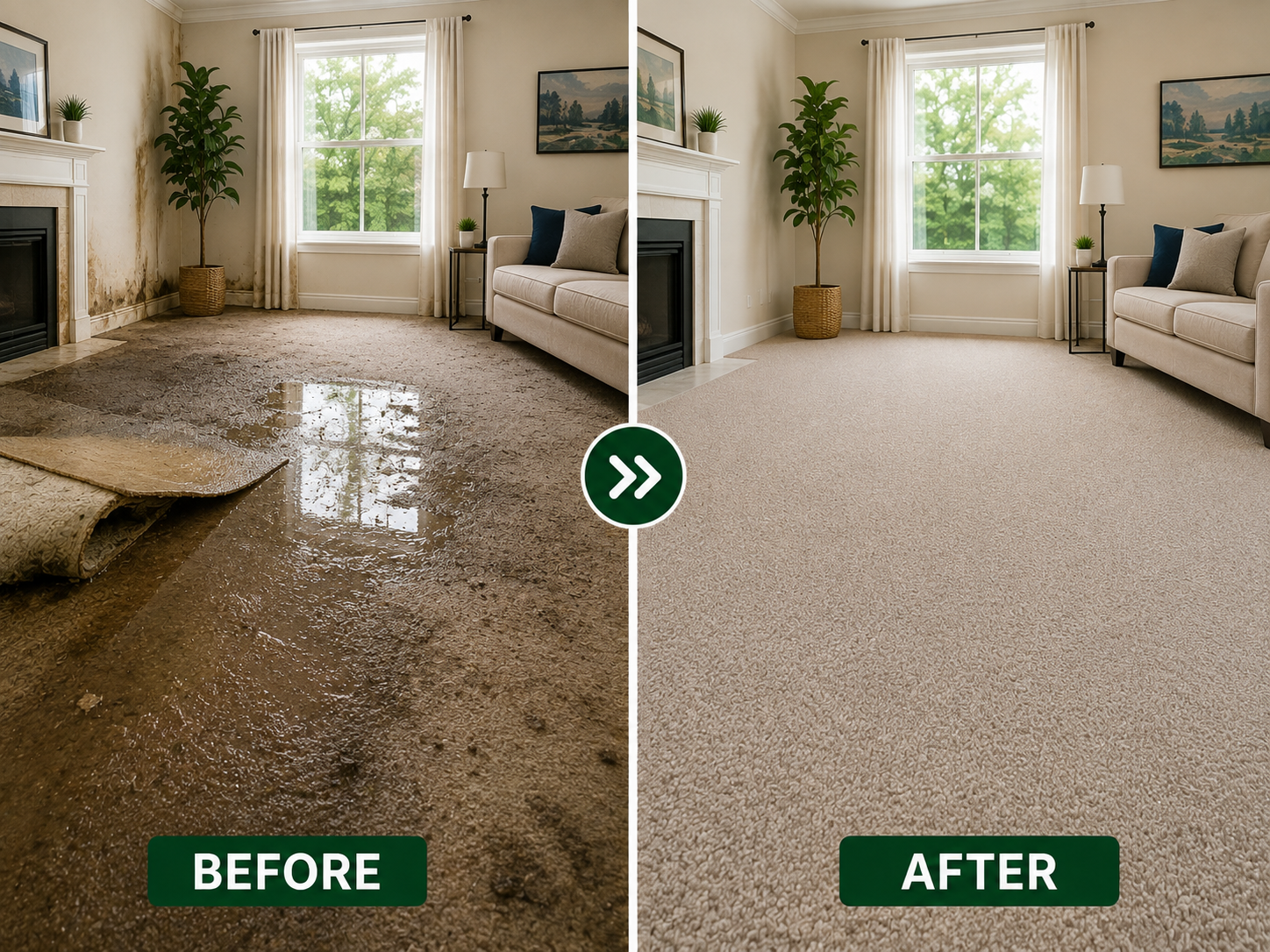
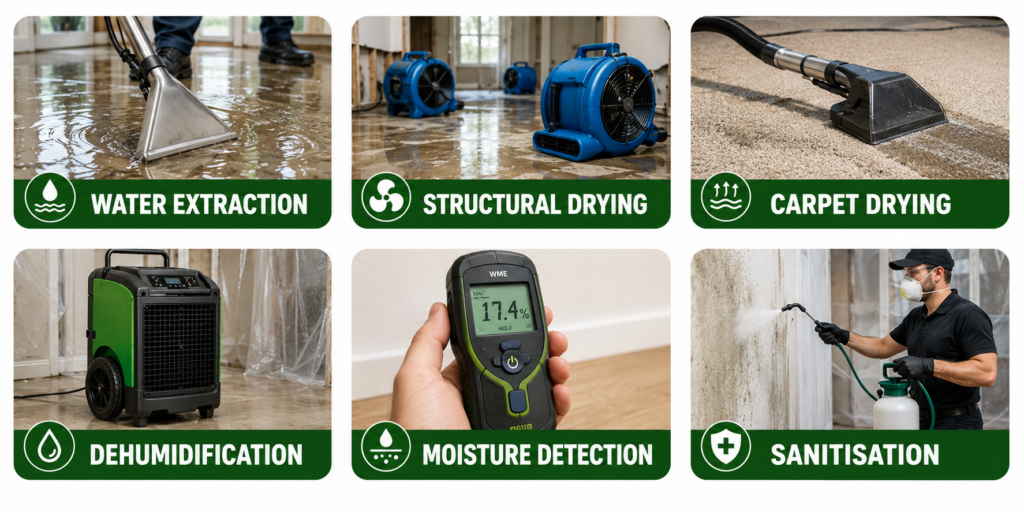
Discovering water inside your home can be stressful, especially when it reaches carpets, flooring, walls or furniture. Whether the problem comes from a burst pipe, plumbing leak, roof leak, storm damage or overflowing appliance, what you do in the first few hours can influence how much of the property can be restored. For Melbourne homeowners, the priority after water damage is to make the area safe, stop further water entering where possible, remove standing water and determine how far moisture has travelled. A floor or carpet can appear dry on top while hidden moisture remains in the underlay, subfloor, plasterboard or wall cavities. Professional flood damage restoration focuses on more than visible water removal. Depending on the situation, restoration can involve water extraction, moisture detection, structural drying, dehumidification, carpet drying, and ongoing moisture assessment. At Aptive Cleaning Services, we help Melbourne property owners manage water-affected areas with professional flood damage restoration solutions designed around the condition of the property.
What Should You Do After Water Damage?
After water damage, first protect people from electrical, structural and contamination hazards. If it is safe to do so, stop the source of the water and move unaffected belongings away from the wet area. The next priorities are to remove standing water, identify moisture in surrounding materials and begin drying. For significant flooding, soaked carpet, wet underlay or water that has entered walls and flooring, professional assessment is recommended because the visible wet area may only represent part of the damage.
A simple sequence is:
Safety → stop the water source → document the damage → water extraction → moisture inspection → structural drying → monitoring → restoration.
When Should You Call a Flood Damage Restoration Company?
Consider professional assistance when water has affected a significant part of your property or when you cannot confidently determine where moisture has travelled.
You should particularly consider a professional assessment when:
- Carpet is completely soaked
- Water has reached the underlay
- Several rooms are affected
- Walls or ceilings are wet
- A pipe has burst
- Stormwater has entered the property
- Water may be contaminated
- Damp smells continue
- Flooring begins to warp
- You suspect hidden moisture
Early intervention may reduce the extent of additional property damage.
Common Flood Restoration Problems That Can Be Professionally Solved
How Long Does Water Damage Restoration Take?
There is no single drying or restoration time for every property.
The timeframe depends on:
- Amount of water
- Water source
- Type of flooring
- Building materials
- Carpet and underlay condition
- Moisture levels
- Indoor humidity
- Air movement
- Number of affected rooms
- How quickly restoration begins
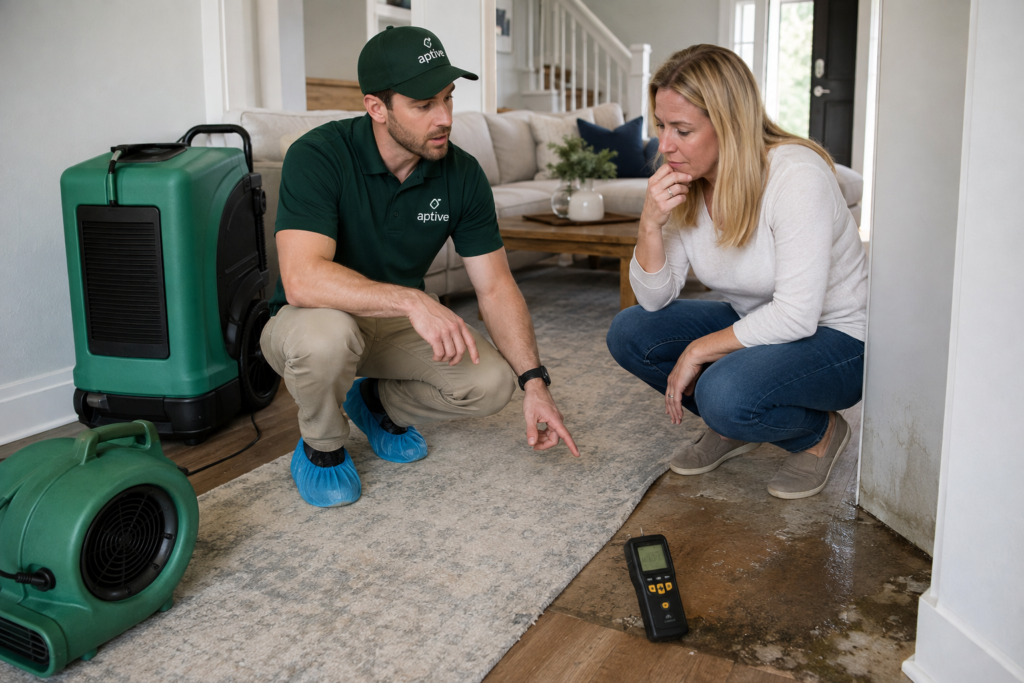
This is why professional restoration teams use moisture readings rather than deciding an area is dry purely by appearance.
A carpet surface can feel dry before the underlay or subfloor reaches an acceptable moisture level.
How Does Structural Drying Work?
After excess water has been extracted, affected materials need sufficient time and airflow to dry.Professional structural drying may involve a combination of:
Air Movers
Air movers increase airflow across wet surfaces, supporting evaporation.
Dehumidifiers
Dehumidification reduces moisture in the surrounding air, helping create conditions that support continued drying.
Moisture Monitoring
Moisture readings help technicians assess whether materials are drying as expected and whether equipment needs to remain in place. The drying setup varies depending on room size, building materials, moisture levels and the severity of the water intrusion. Simply opening windows may not be enough when moisture has entered building materials.
DIY Water Cleanup vs Professional Flood Damage Restoration
A small clean-water spill that has not penetrated surrounding materials may sometimes be manageable with household equipment. Professional assistance becomes more important when there is:
- Significant standing water
- More than one affected room
- Soaked carpet and underlay
- Water beneath flooring
- Wet plasterboard
- Ceiling damage
- Storm flooding
- Burst-pipe damage
- Possible contamination
- Persistent dampness
- Hidden moisture
Professional water damage restoration is different from simply drying the surface. The objective is to identify the extent of the moisture, extract excess water and create an appropriate drying strategy for affected materials.
Stop the Source of the Water Where Possible
Before beginning the restoration process, identify why water has entered the property. Common causes of water damage in Melbourne homes include:
- Burst pipes
- Plumbing leaks
- Roof leaks
- Heavy rainfall
- Storm damage
- Overflowing appliances
- Internal plumbing failures
- Blocked drainage systems
Stopping the source prevents additional water from entering while cleanup is underway. A burst pipe, for example, may require the home’s water supply to be isolated until plumbing repairs can be completed.
What About Water from Sewage or Contaminated Sources?
Not all flood water should be treated the same way.
Water involving sewage, wastewater or other contaminants may present additional hygiene risks and should not be handled like ordinary clean-water flooding.
Avoid unnecessary contact with contaminated water.
Professional restoration may require:
- Water extraction
- Removal of contaminated materials
- Cleaning
- Sanitisation
- Controlled drying
- Appropriate disposal procedures
The type of water involved should always be considered before deciding whether materials such as carpets and underlay can be restored.
What Happens to Wet Carpet Underlay?
Underlay can absorb a large amount of moisture even when the carpet surface begins to feel dry. This can make flood damage difficult to assess without checking beneath the carpet. Wet underlay can contribute to:
- Persistent dampness
- Unpleasant odours
- Slow drying
- Moisture migration into the subfloor
- Conditions favourable to microbial growth
Depending on the type of underlay, severity of flooding and contamination, it may need intensive drying or replacement. This is one reason professional flooded carpet restoration should include an assessment of both the carpet and the layers underneath it.
