- Licensed & Insured
- Same-Day Service
- Melbourne Local Experts
- Residential & Commercial
- 5-Star Rated Service
TABLE OF CONTENTS
- Does Cleaning Solar Panels Improve Efficiency?
- How Dirt Affects Solar Panel Performance
- Do Dirty Solar Panels Reduce Electricity Output?
- Do Bird Droppings Affect Solar Panels?
- Does Pollen Affect Solar Panels?
- Does Rain Clean Solar Panels?
- How to Tell If Solar Panels Need Cleaning
- Safest Way to Clean Solar Panels
- How to Keep Solar Panels Cleaner for Longer
- How Often Should Solar Panels Be Cleaned in Melbourne
RELATED SERVICES
- Upholstery Cleaning
- Carpet Steam Cleaning
- Mattress Cleaning
- Rug Cleaning
- Tile Cleaning
- Leather Cleaning
- Flood Restoration
- Flood Restoration
- Window Cleaning
- Solar Panel Cleaning
Does Cleaning Solar Panels Improve Efficiency?
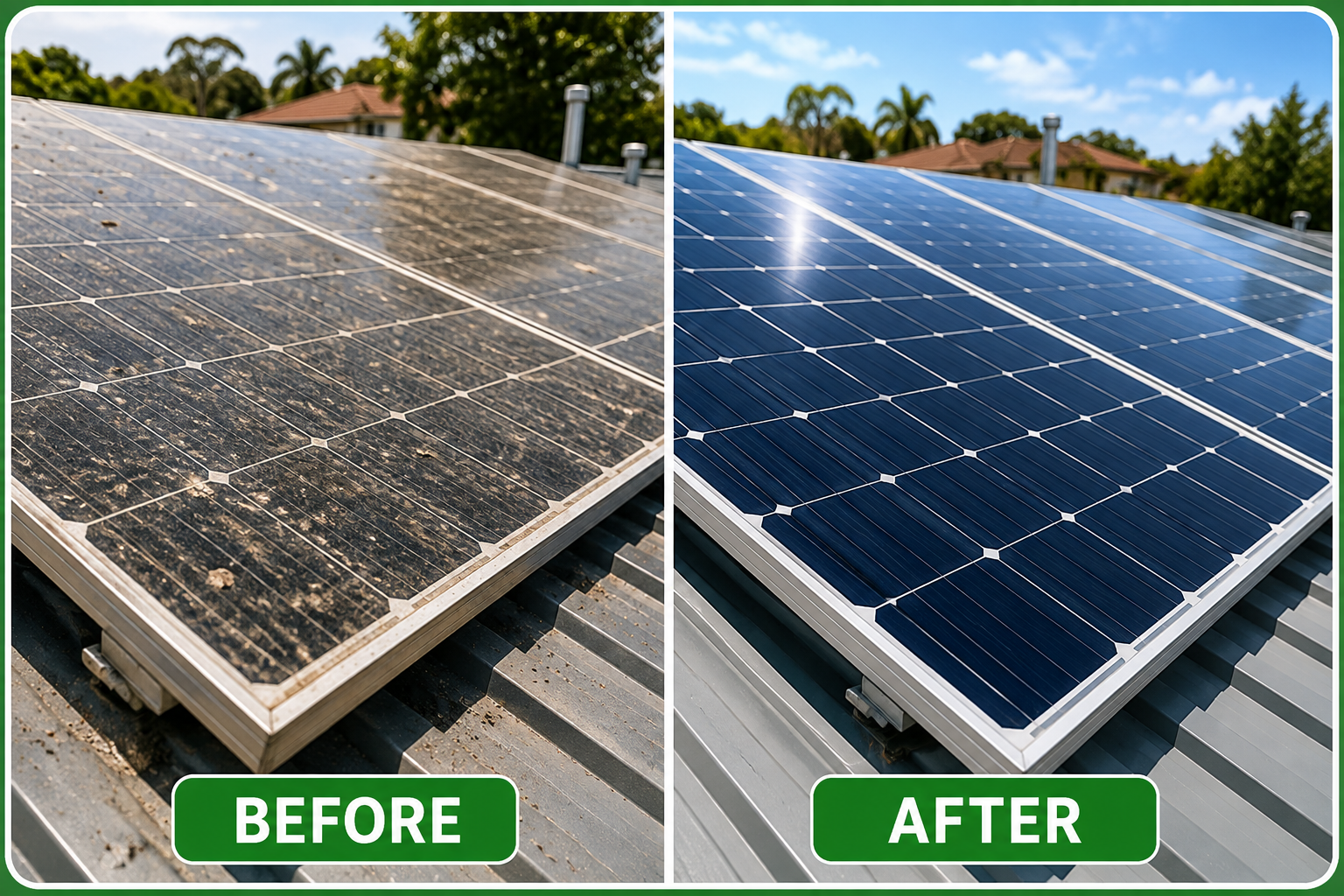
Solar panels spend every day exposed to the outdoors. Dust, pollen, bird droppings, leaves, traffic pollution and other debris can gradually settle on the glass surface. When enough contamination builds up, it can reduce the amount of sunlight reaching the photovoltaic cells beneath the glass. So, does cleaning solar panels improve efficiency? In many situations, cleaning can help restore performance that has been lost because of surface dirt or debris. However, the improvement will depend on how dirty the panels are, where the property is located, the angle of the panels, local weather conditions and whether another issue is affecting the solar system. For Melbourne homes and businesses, regular visual checks and sensible solar panel maintenance can help keep rooftop systems in better condition and make it easier to identify when professional cleaning may be worthwhile. At Aptive Cleaning Services, we provide professional solar panel cleaning across Melbourne for residential and commercial properties, using careful cleaning methods designed to remove surface contamination without unnecessarily damaging the panel glass.
How Does Dirt Affect Solar Panel Performance?
Dirt creates a barrier between sunlight and the solar cells. As contamination becomes heavier, less light may reach portions of the photovoltaic panel. This is particularly relevant when dirt is concentrated in certain areas rather than evenly distributed. For example, a small amount of ordinary dust across the entire panel may be less concerning than thick bird droppings covering one section. Solar systems are designed to operate outdoors, but they are not completely immune to environmental buildup. Regular inspection can help identify whether contamination is becoming significant enough to justify cleaning.
Do Dirty Solar Panels Produce Less Electricity?
They can. When dirt, debris or other material blocks sunlight from reaching the panel surface, solar energy output may be reduced. The amount of reduction depends on several factors, including:
- Level of contamination
- Panel orientation
- Roof angle
- Surrounding vegetation
- Bird activity
- Local dust levels
- Nearby roads or construction
- Seasonal weather
- Amount of sunlight available
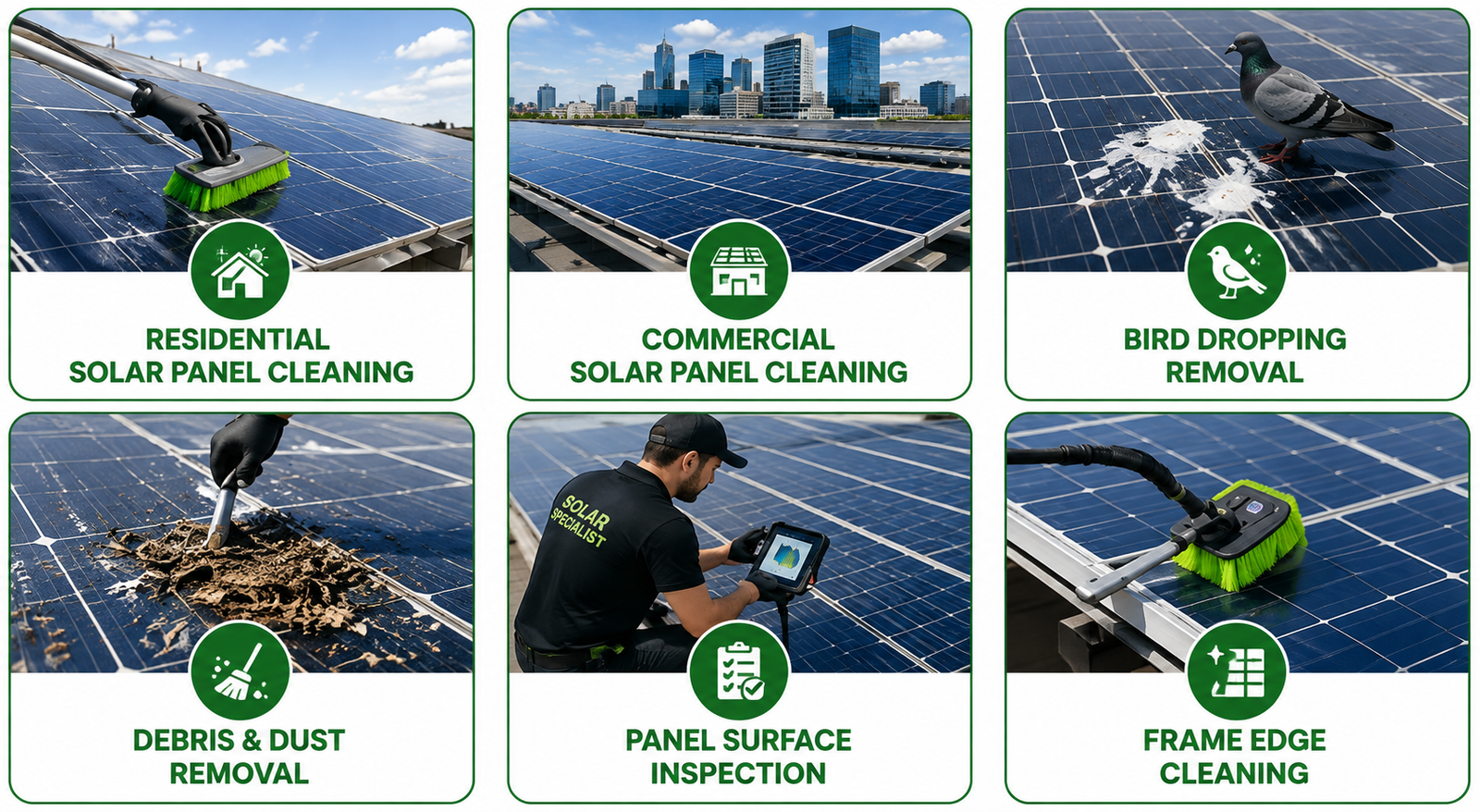
Common Solar Panel Cleaning Services We Provide
Do Bird Droppings Affect Solar Panel Performance?
Bird droppings can be more problematic than ordinary dust because they often form concentrated patches on the glass. Unlike loose dust that may gradually move with rainfall or wind, dried bird droppings can remain attached to the panel. This can create localised obstruction and may also make the surface more difficult to clean later. Bird activity may be particularly noticeable where pigeons or other birds frequently perch around:
- Roof ridges
- Solar panel edges
- Nearby antennas
- Trees
- Building ledges
Prompt removal can help prevent heavy buildup.
Does Pollen Affect Solar Panels?
Pollen can collect on solar panels in much the same way that it settles on cars, windows and outdoor furniture. During periods of high pollen activity, a fine coating may develop on the glass and reduce clear sunlight exposure. Does Cleaning Solar Panels Improve Efficiency? In situations where pollen, dust and other surface residue have built up, cleaning may help restore better sunlight contact with the panel surface. Pollen can also combine with dust and moisture, creating more noticeable residue after drying. For Melbourne properties surrounded by gardens or trees, seasonal pollen may therefore form part of the overall solar panel maintenance requirements.
Does Rain Clean Solar Panels?
Rain can remove some loose dust and surface particles, particularly on panels installed at an angle. However, rain should not always be considered a complete cleaning solution.
Rainwater may not fully remove:
- Dried bird droppings
- Sticky pollen residue
- Heavy dust buildup
- Leaves trapped around panel edges
- Mineral deposits
- Stubborn grime
Rain can also mix with existing contamination and leave marks as the water dries. Therefore, a panel may appear cleaner after rain without necessarily being completely free of surface buildup.
How Can You Tell If Solar Panels Need Cleaning?
A visual inspection from a safe location can sometimes reveal obvious contamination.
Possible signs include:
- Visible dust layers
- Bird droppings
- Leaf debris
- Pollen buildup
- Dirt around panel edges
- Uneven surface contamination
- Water marks
- A noticeable reduction in output that cannot be explained by weather or seasonal conditions
Your solar monitoring system or inverter data may also help identify unusual changes in electricity generation. However, lower output is not automatically proof that cleaning is required. Cloud cover, shading, system faults, seasonal sunlight changes and electrical issues can also influence performance.
What Is the Safest Way to Clean Solar Panels?
The appropriate method depends on the panel system and the type of contamination.
Professional cleaning may involve:
Visual Inspection
The surface is checked for obvious dirt, debris and contamination.
Gentle Dirt Removal
Loose debris is carefully removed without scratching the panel glass.
Non-Abrasive Cleaning
Suitable brushes or water-fed equipment may be used to loosen dirt.
Controlled Water Use
Water is applied carefully rather than using unnecessary pressure.
Final Inspection
The panel surface is checked after cleaning to identify remaining contamination or visible damage.
The aim is to clean effectively without damaging the glass, frames, seals or surrounding components.
Why Purified Water May Be Used for Solar Panel Cleaning
Ordinary tap water can contain minerals. When water dries naturally on glass, some dissolved minerals may remain behind as spots or residue. Professional solar panel cleaners may therefore use purified or deionized water systems in suitable situations. This can help reduce mineral residue and support a cleaner finish without relying heavily on detergents. The exact cleaning approach should still depend on the type and condition of the solar panels.
How to Keep Solar Panels Cleaner for Longer
You cannot completely prevent outdoor panels from collecting dirt, but sensible maintenance can reduce unnecessary buildup. Helpful measures include:
- Monitor panels from a safe location
- Keep nearby vegetation appropriately maintained
- Address excessive bird activity around the roof
- Avoid directing sprinklers onto rooftop panels
- Check for concentrated bird droppings
- Monitor electricity production
- Arrange professional cleaning when contamination becomes significant
Avoid climbing onto the roof simply to perform frequent visual inspections.
Commercial Solar Panel Cleaning
Commercial systems can contain much larger numbers of panels than residential installations. Warehouses, offices, retail buildings and industrial properties may also experience greater exposure to:
- Pollution
- Dust
- Traffic residue
- Industrial particles
- Bird activity
Because commercial systems represent a larger energy investment, maintaining panel cleanliness and monitoring system performance can be particularly important. Professional commercial solar panel cleaning Melbourne services can help manage larger rooftop arrays without requiring staff to undertake potentially unsafe roof work.
Residential Solar Panel Cleaning
Residential solar systems may be exposed to contamination from:
- Nearby trees
- Birds
- Dust
- Garden activity
- Road traffic
- Roof debris
For Melbourne homes, professional cleaning may be useful where panels are difficult to access or have developed significant surface buildup. Does Cleaning Solar Panels Improve Efficiency? It can when dust, dirt, pollen, bird droppings, or other contaminants are limiting sunlight from reaching the panel surface. Keeping the panels clean can therefore form part of a wider solar maintenance routine alongside monitoring system performance and following appropriate electrical maintenance requirements.
Solar Panel Cleaning for Melbourne Homes and Businesses
Melbourne properties contain solar systems of many different sizes and configurations. A small residential rooftop installation has different cleaning requirements from a large commercial system, but both can experience the same basic problem: environmental contamination reducing the amount of clear sunlight reaching the panel surface. Does Cleaning Solar Panels Improve Efficiency? When dust, dirt, pollen or bird droppings are blocking sunlight from reaching the panels, professional cleaning may help restore better surface exposure and support more consistent solar performance. At Aptive Cleaning Services, we provide professional solar panel cleaning services in Melbourne for residential and commercial properties. Our approach focuses on removing common surface contaminants such as dust, dirt, pollen and bird droppings while using methods suited to delicate solar panel glass.
Solar Panel Cleaning vs Solar System Maintenance
Cleaning and electrical maintenance are not the same thing. Does Cleaning Solar Panels Improve Efficiency? It can when dust, dirt, pollen, bird droppings or other surface contamination is reducing the amount of sunlight reaching the panel glass. Solar panel cleaning focuses mainly on removing this external buildup, while solar system maintenance may involve checking electrical components, wiring, mounting systems, inverter performance and other technical aspects. A cleaner cannot diagnose every electrical problem simply by washing the panels. If your system continues producing unexpectedly low output after cleaning, the issue may be unrelated to surface contamination and should be assessed by an appropriately qualified solar professional.
How Often Should Solar Panels Be Cleaned in Melbourne?
There is no single cleaning frequency suitable for every property. The right schedule depends on environmental exposure. Consider more frequent inspection if your property has:
- Heavy bird activity
- Nearby trees
- High pollen levels
- Busy roads
- Construction nearby
- Significant airborne dust
- Low-angle panels where debris collects
- Commercial or industrial surroundings
A relatively exposed suburban rooftop may have different maintenance needs from a commercial solar array or a property surrounded by vegetation. Instead of cleaning simply because a certain number of months has passed, check the panel condition and system performance.
