
- Licensed & Insured
- Same-Day Service
- Melbourne Local Experts
- Residential & Commercial
- 5-Star Rated Service
TABLE OF CONTENTS
- Can You Steam Clean a Rug Safely?
- What Is Rug Steam Cleaning?
- Which Rugs Can Be Steam Cleaned?
- Can Wool and Persian Rugs Be Steam Cleaned?
- Why Colourfastness Testing Matters
- Can Steam Cleaning Damage a Rug?
- Does Steam Cleaning Remove Stains and Odours?
- Why Proper Rug Drying Is Important
- DIY vs Professional Rug Cleaning
- Professional Rug Cleaning in Melbourne
RELATED SERVICES
- Upholstery Cleaning
- Carpet Steam Cleaning
- Mattress Cleaning
- Rug Cleaning
- Tile Cleaning
- Leather Cleaning
- Flood Restoration
- Flood Restoration
- Window Cleaning
- Solar Panel Cleaning
Why Do Windows Get Dirty So Quickly? Melbourne Cleaning Advice
Windows can look spotless after cleaning and then become dusty, streaked, or marked again surprisingly quickly. For many Melbourne properties, this is not simply a cleaning issue. Airborne dust, pollen, rain residue, traffic pollution, fingerprints, hard water marks and dirt around window frames and tracks can all contribute to glass losing its clear appearance. So, why do windows get dirty so quickly? The answer usually comes down to where the property is located, how exposed the windows are, nearby trees or roads, weather conditions, and how the glass was cleaned previously. For Melbourne homes, apartments, and commercial properties, understanding what causes dirty windows can make it easier to maintain the glass between professional cleans. At Aptive Cleaning Services, we provide professional window cleaning services across Melbourne for interior and exterior glass, helping property owners maintain clearer, better-presented windows.
Why Do Outside Windows Get Dirty Faster?
Exterior windows face constant exposure to the surrounding environment. Why Do Windows Get Dirty So Quickly? Wind can carry fine dust and soil particles onto the glass, while nearby trees may contribute pollen, leaves and organic residue. Roads and construction sites can also introduce additional airborne grime. Once moisture reaches the glass, these particles can stick more easily and leave visible marks or residue. Properties near busy roads or active building sites may therefore notice their exterior windows becoming dirty sooner than those in more sheltered locations. This is why exterior window cleaning in Melbourne may need to be scheduled according to the property’s surroundings rather than following the same timetable for every building.
Does Melbourne Weather Make Windows Dirty?
Weather can influence how quickly glass loses its clean appearance. Why Do Windows Get Dirty So Quickly? Rain can loosen dirt already sitting on windows, but as the water moves across the surface, it can redistribute dust, pollen and other contaminants. When the droplets dry, they may leave behind visible water spots, streaks, or residue, making the glass appear dirty again. Wind can also carry:
- Dust
- Pollen
- Soil
- Leaves
- Fine debris
onto windows. During periods of dry or windy conditions, dusty windows may become noticeable quickly. Following rain, existing dirt may appear as streaks or spots. The effect varies depending on the property’s location and how protected the windows are from the surrounding environment.
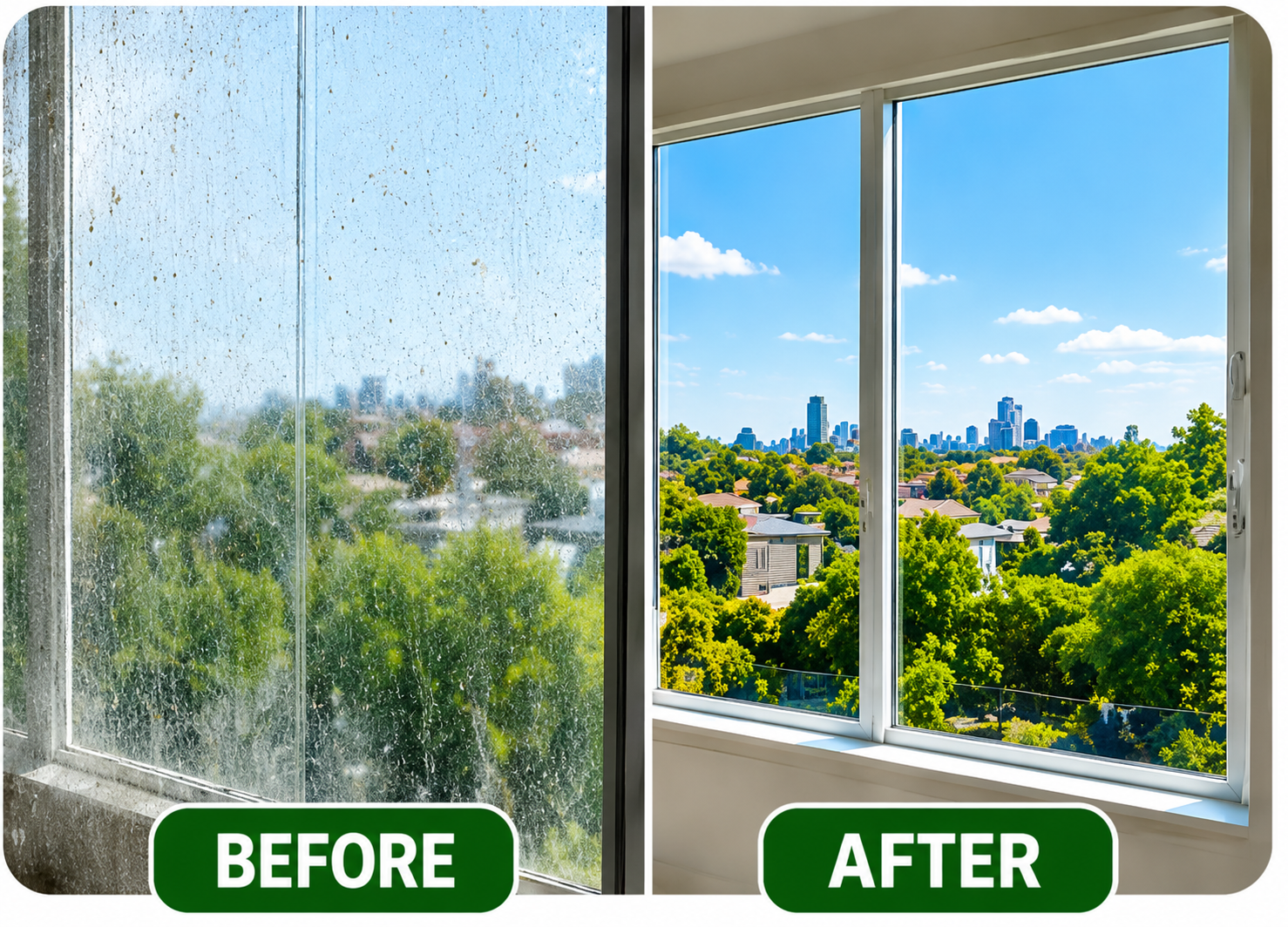
Common Window Cleaning Services We Provide

Why Does Rain Leave Marks on Windows?
Rainwater itself is not necessarily the main reason windows look dirty after a storm. Why Do Windows Get Dirty So Quickly? If the glass already contains dust, pollen or pollution residue, rain can move these contaminants across the surface. As the water evaporates, dirt and residue may remain behind as visible spots, streaks or marks, making the windows appear dirty again soon after rainfall. Rain can also wash dirt from:
- Roof edges
- Window frames
- Building surfaces
- Screens
- Surrounding structures
onto the glass. This is why windows sometimes look worse after rainfall even though they have effectively been rinsed with water.
Why Are My Windows Always Dusty?
Dust can settle on both interior and exterior windows. Outside, airborne particles can come from roads, gardens, landscaping, dry soil and nearby construction work. Inside the home, dust may come from:
- Fabrics
- Carpet
- Furniture
- Open doors and windows
- Everyday household activity
- Heating and cooling airflow
Window sills and tracks can also collect significant dust. If these areas are not cleaned when the glass is cleaned, particles may gradually move back onto the window surface. Professional window cleaning should therefore consider the surrounding window area rather than focusing only on the centre of the glass.
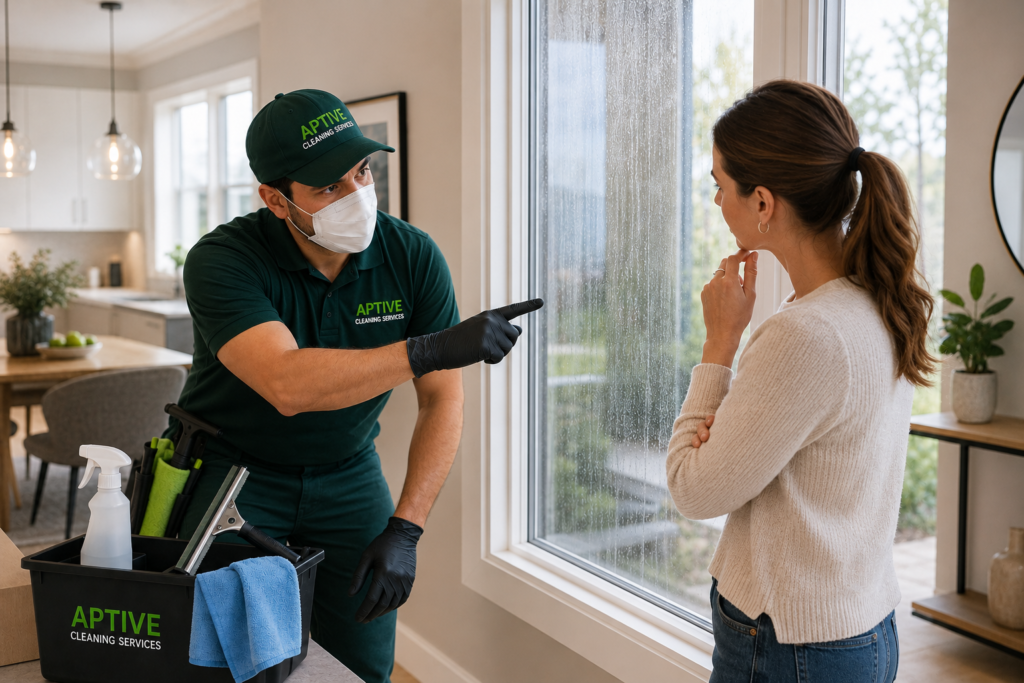
How Traffic Pollution and Road Grime Affect Windows
Homes, apartments and commercial buildings near busy roads can experience additional buildup on their exterior glass. Vehicle movement can contribute to airborne dust and fine road grime. Over time, these particles may settle onto:
- Window glass
- Frames
- Sills
- Flyscreens
- Tracks
The contamination can become more noticeable when mixed with rain or moisture. Regular professional window cleaning Melbourne services can help remove this buildup before it becomes more difficult to clean.
Does Construction Dust Make Windows Dirty?
Construction and renovation work can produce significant amounts of fine dust. If there is building activity close to your property, particles can settle repeatedly on windows even shortly after they have been cleaned. Construction-related residue may include:
- Fine dust
- Soil
- Building debris
- Cement-like particles
- General airborne dirt
Some residues may require greater care than ordinary household dust because abrasive particles can potentially scratch glass if rubbed aggressively. Why Do Windows Get Dirty So Quickly? Fine construction dust, road grime, and other particles can repeatedly settle on the surface and become harder to remove over time. Loose material should therefore be removed carefully before deeper cleaning begins.
Why Do Windows Become Streaky After Cleaning?
Streaks are often caused by moisture or cleaning solution drying unevenly across the glass. Common reasons include:
- Using too much detergent
- Allowing cleaning solution to dry before removal
- Using dirty cloths
- Cleaning with contaminated water
- Leaving residue on the glass
- Repeatedly wiping with the same dirty material
Window frames can also contribute to streaking. If dirty water runs from the frame onto freshly cleaned glass, the finished window can quickly lose its streak-free appearance. Professional cleaning aims to control both the cleaning solution and its removal so residue is not left behind.
Can Dirty Window Tracks Affect Clean Glass?
Yes. Window tracks collect considerable amounts of:
- Dust
- Insects
- Soil
- Hair
- Pollen
- General household debris
When wind or moisture moves through the window area, contamination can transfer back towards the glass and surrounding frames. Why Do Windows Get Dirty So Quickly? One reason is that dust, dirt and debris collected in window tracks and sills can easily move back onto freshly cleaned glass. Cleaning these areas helps improve the overall appearance of the window and prevents a clean pane from being surrounded by visibly dirty frames, tracks and sills.
DIY vs Professional Window Cleaning
Routine interior glass can often be maintained using basic household cleaning. Professional cleaning becomes more useful when dealing with:
- Large window areas
- Double-storey windows
- High or difficult-to-reach windows
- Significant exterior grime
- Hard water marks
- Commercial glass
- Large numbers of windows
- Areas where safe access is difficult
Professional window cleaners also have equipment designed to reach and clean glass efficiently while reducing the need for homeowners to work at height.
How Often Should Windows Be Cleaned?
There is no single schedule suitable for every Melbourne property. Cleaning frequency depends on:
- Property location
- Nearby roads
- Trees and gardens
- Construction activity
- Number of occupants
- Pets and children
- Window accessibility
- Interior versus exterior glass
- Commercial activity
- Desired appearance
A commercial shopfront may need cleaning much more frequently than windows at the rear of a residential property. Instead of relying only on a fixed timetable, consider how quickly visible dust, spotting and residue return after each clean.
When Should You Consider Professional Window Cleaning?
Professional cleaning may be appropriate when ordinary cleaning no longer produces clear results or when access becomes difficult. Common signs include:
- Persistent streaking
- Heavy exterior grime
- Hard water spots
- Cloudy glass
- Dirty high windows
- Difficult-to-reach exterior panes
- Significant buildup around frames
- Windows that quickly look dirty after DIY cleaning
A professional assessment can help determine whether the issue is ordinary surface contamination or more stubborn staining.
Window Cleaning for Melbourne Homes and Businesses
Melbourne properties experience different levels of environmental exposure depending on their location. Why Do Windows Get Dirty So Quickly? A suburban home surrounded by trees may experience more pollen and organic debris, while an apartment near a busy road may collect higher levels of airborne dust and traffic-related grime. Commercial properties may also require more regular glass maintenance because clean windows contribute to a better appearance for customers and visitors.
At Aptive Cleaning Services, we provide professional window cleaning services in Melbourne for residential and commercial properties. Our service can address interior and exterior glass while considering common problem areas such as frames, tracks, water spotting and general environmental buildup.
